Photo: Geoff Wong, CC BY 2.0, via Wikimedia Commons
Every year, on the third Thursday of November, bars and wine shops across France put up the same handwritten sign: "Le Beaujolais Nouveau est arrivé!" This year that Thursday falls on November 19. The wine in the bottle was still hanging on the vine in late summer, and by law it can't be sold before that day.
Wine people tend to roll their eyes at Beaujolais Nouveau. It's light, fruity and not meant to age, and its global fame owes a lot to clever marketing in the 1970s and 1980s. I think that misses the point. It's a harvest celebration you can drink, and if you're anywhere near Lyon in November, the region it comes from is one of the most pleasant places in France to spend a few days eating well.
What makes it "nouveau"
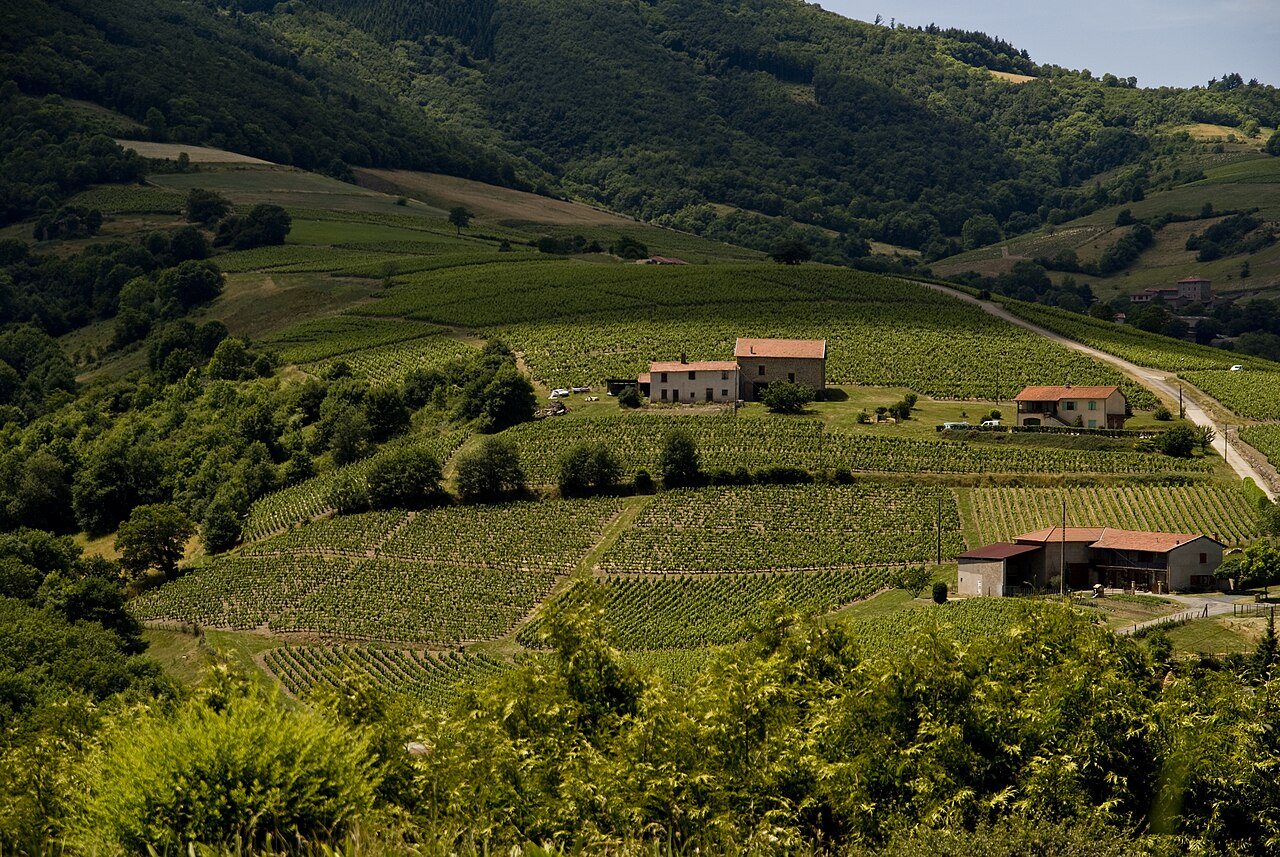
Beaujolais Nouveau is made from the Gamay grape, grown in the Beaujolais region just north of Lyon. Most of it is made using carbonic maceration, a method where whole bunches of grapes are sealed in tanks so fermentation starts inside the berries themselves. That process pulls out bright, fruity flavors (people often mention banana or bubblegum notes) and very little tannin. It's then bottled within weeks.
The result is a wine meant to be drunk young, ideally within a few months, and served slightly cool. If you've only ever had it from a supermarket shelf in another country months later, the version poured in a Lyon bar on release night is noticeably fresher.
Why the third Thursday
For a long time the release date was November 15. The trouble was that it moved around the week, sometimes landing on a weekend when shops and shipping slowed down. In 1985 the date was fixed to the third Thursday of November, which gives the wine trade the rest of the week and the weekend to sell it.
The hype grew in the decades around that change. Producers, most famously Georges Duboeuf, turned the release into a race to get the first bottles to Paris, then London, then Tokyo and New York. Some of that frenzy has faded, but the date still works as an excuse for a party, and in Beaujolais itself it's taken seriously.
Where to celebrate: Beaujeu and Lyon
The biggest local celebration is in Beaujeu, the small town that gave the region its name. Les Sarmentelles de Beaujeu runs for several days around the release, and the main event comes on the Wednesday night, with a torchlit procession and the first barrel broached at midnight. It's crowded, cold and good fun, and it's very much a local festival rather than a polished tourist show, which I count in its favor.
If you'd rather sleep in a city, Lyon is the practical base. On the Thursday many bouchons (the city's traditional bistros) and wine bars pour the new wine, often in the "pot lyonnais," a thick-bottomed local bottle. Expect busy rooms, so book dinner ahead if there's somewhere specific you want to eat.
What to eat with it
This is a wine that wants simple food. In Lyon that means charcuterie, saucisson, rosette sausage, pork rillettes and a plate of cheese. Lentil salads, roast chicken and Lyon's quenelles also work. Because Beaujolais Nouveau has so little tannin, it won't fight with most dishes, and it's one of the few reds I'd happily pair with a salad.
If you visit wine estates in the region, many will offer a small tasting with bread and cheese, and some of the larger ones run proper lunches during release week. Ask in advance, since smaller family domaines may not have anyone free to host on the busiest days.
Look past the nouveau
The best reason to come to Beaujolais isn't the nouveau. The region has ten "cru" villages, including Morgon, Fleurie and Moulin-à-Vent, whose wines are more serious and can age for years. Tasting a cru after a glass of nouveau is the quickest way to see how much range the Gamay grape has.
In the south of the region, the Pierres Dorées area is known for villages built from a honey-colored stone that glows in late afternoon light. Oingt is the one most people visit, and it's small enough to walk around in under an hour.
Getting there and getting around
Lyon is about two hours from Paris by high-speed train, and Lyon Saint-Exupéry airport has flights from much of Europe. From Lyon, regional trains run north to Villefranche-sur-Saône and Belleville, which work as jumping-off points for the vineyards, but a car or an organized tour makes it much easier to reach the villages.
If you plan to taste, don't plan to drive. Many tours from Lyon handle the transport, and some estates and towns can help arrange local taxis. November weather in Beaujolais is often gray and damp, so bring a warm layer and shoes that can handle muddy vineyard paths. The upside is that you'll have the cru villages mostly to yourself once the release week crowds go home.