Photo: Marek Ślusarczyk (Tupungato), CC BY 3.0, via Wikimedia Commons
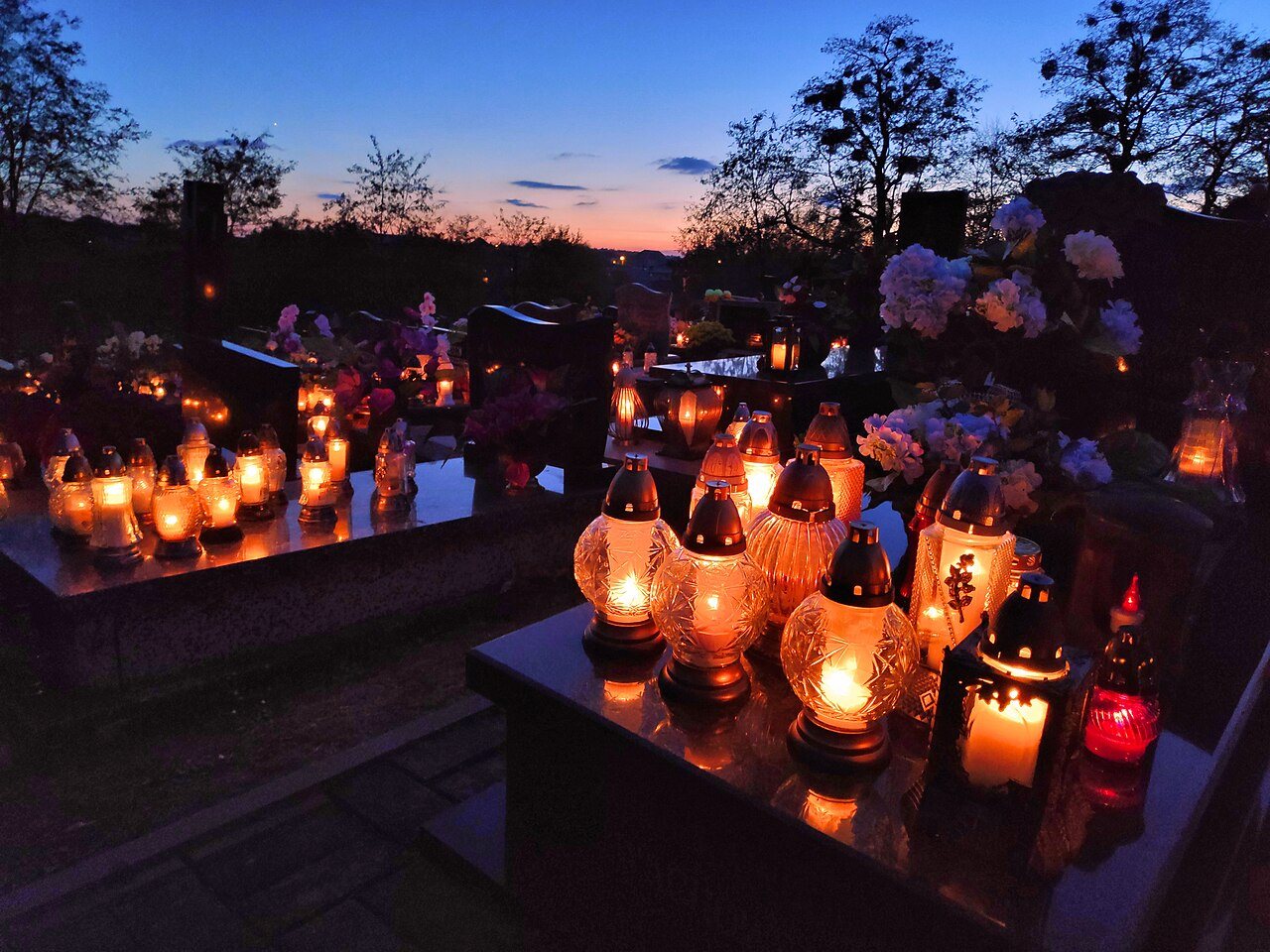
If you happen to be in Poland on the evening of November 1, take a walk to the nearest cemetery after dark. You'll find it full of people, quietly busy, and lit by more candles than seems possible, small flames in red and amber glass jars covering grave after grave until the whole place glows.
This is Wszystkich Świętych, All Saints' Day. It's a public holiday, and for many Polish families it's the one day of the year when everyone makes the trip to the graves of grandparents, parents and old friends, even if it means driving across the country.
It isn't a gloomy occasion, exactly. It's solemn, but it's also social, with relatives catching up between graves and kids helping light the candles. I find it one of the most moving things a traveler can witness in Europe, as long as you remember you're a guest.
Two days for remembering
The church calendar sets aside November 1 for All Saints and November 2 for All Souls, a day of prayer for all the dead. In Poland the second day is called Zaduszki. November 1 is the public holiday, so it's the day most families actually visit, and the cemeteries stay busy into the evening of the 2nd.
The customs mix Catholic practice with much older habits of honoring ancestors in late autumn. Some of them echo Dziady, an old Slavic feast for the spirits of the dead, which the poet Adam Mickiewicz borrowed as the title of his best-known drama. You don't need to know any of that to feel the atmosphere, but it explains why the day carries so much weight.
Candles, chrysanthemums and a clean grave
The preparations start days ahead. Families visit to scrub headstones, sweep away leaves and tidy the plots. Then on the day itself they come back with flowers, usually chrysanthemums in pots, and with znicze, the glass grave lanterns that give the evening its glow.
You'll see stalls selling both outside nearly every cemetery gate in the days before November 1. Many people also light a candle on graves that look forgotten, or on the graves of soldiers and other people with no family left to visit. It's a small gesture, and one you're welcome to join in.
The biggest family trip of the year
Because so many people head home at once, the holiday weekend is famously busy on the roads. Polish police run a yearly traffic operation around it called "Znicz," named after the candles, and trains and buses fill up early.
In the cities, public transport usually adds extra services to the largest cemeteries, and some streets nearby are closed to cars. Shops and many businesses close on November 1 itself, so if you're traveling, stock up on anything you need the day before.
Where to see it in Warsaw and Kraków
In Warsaw, Powązki Cemetery is the place most visitors go. The old part, founded in 1790, is full of elaborate tombs, angels and moss-covered stone, and the graves include those of the composer Stanisław Moniuszko and the parents of Frédéric Chopin. Every year around All Saints' Day, well-known actors, journalists and other public figures stand at the gates with collection tins, raising money to restore the old monuments. That tradition, known as the kwesta, was started in the 1970s by the music critic Jerzy Waldorff, and it's become part of the day for many Varsovians.
In Kraków, Rakowicki Cemetery is the city's grand old burial ground, dating from the early 1800s and home to the grave of the painter Jan Matejko. It's large and leafy, and on the evening of November 1 the main avenues are lined with candlelight.
Smaller town and village cemeteries are just as striking, and sometimes more so, since you'll see whole communities there at once.
How to visit respectfully
A few simple rules go a long way. Dress warmly, keep your voice low, and stick to the paths rather than stepping between graves. If you want to take photographs, go for wide shots of the candles and avoid pointing a camera at people who are grieving or praying.
Lighting a candle yourself is fine and usually appreciated. Buy one at the gate and place it at a monument, a forgotten grave, or a memorial to the war dead (larger cemeteries usually have one). Just don't move other people's candles or flowers to make room.
If you're going this year
November 1 falls on a Sunday this year, so expect the cemeteries to be especially busy through the afternoon and evening, and plan on crowded trams. The most beautiful time to visit is just after sunset, when the candles take over. If you miss the day itself, go on the 2nd or even a few days later, because many candles keep burning for days afterward and the glow lingers well into the week.