Photo: Bahnfrend, CC BY-SA 4.0, via Wikimedia Commons
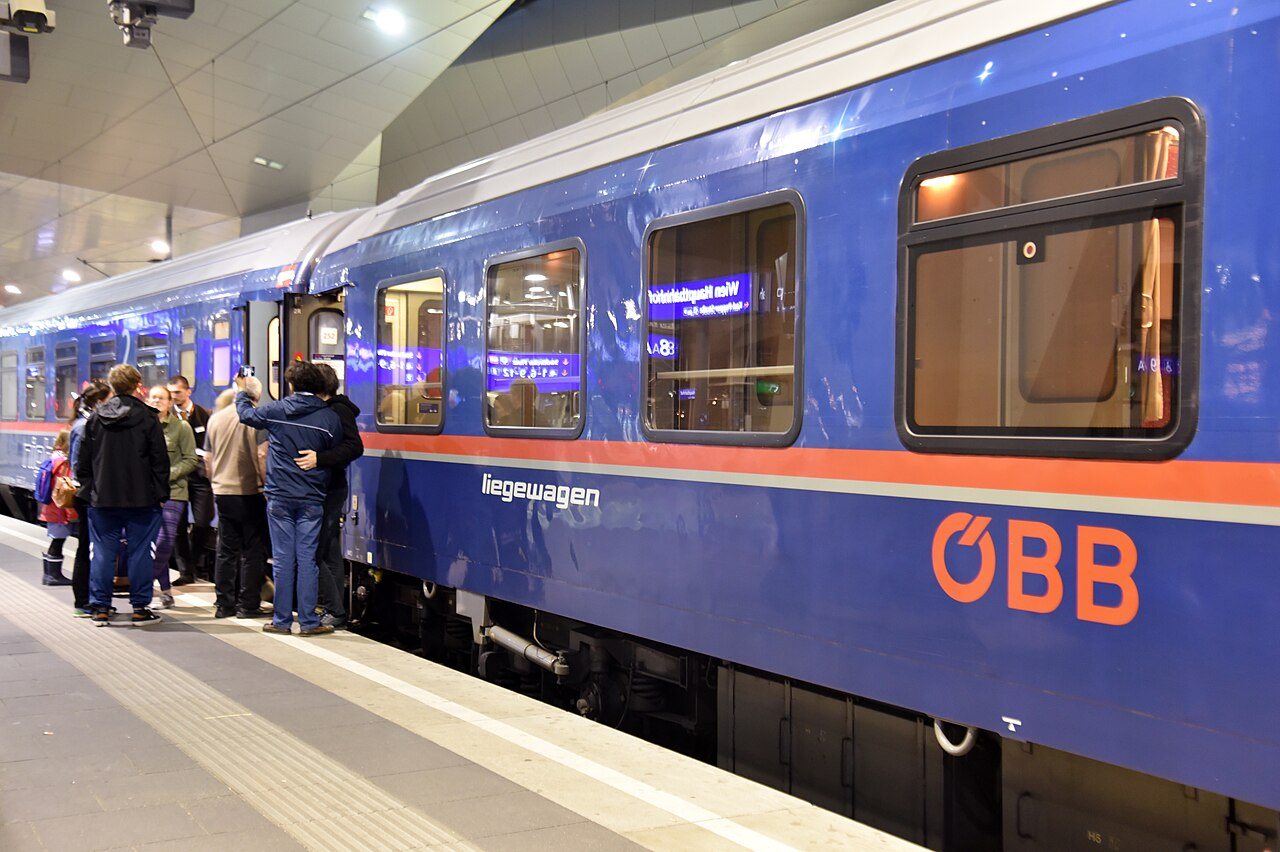
You get on at Vienna's main station a little after dinner, find your compartment, make up the bunk, and wake up somewhere else with the countryside going past the window. That's the pitch for a night train, and it's a good one. You skip a hotel night and an early airport alarm, and you arrive in the middle of a city instead of at a terminal half an hour out.
Night trains in Europe were in decline for years. Then, in December 2016, Deutsche Bahn ended its own sleeper services and Austria's national railway, ÖBB, picked up several of the routes under a new brand, Nightjet. Since then the network has grown, newer operators have joined in, and a lot of travelers who swore off sleeper trains have come back.
Winter is a fine time to try one. The nights are long, so the hours you spend on board are mostly hours that would be dark anyway. Here's how to book well and sleep reasonably.
Seat, couchette or sleeper
Most European night trains sell three kinds of space, and the differences matter more than the names suggest.
A seat is the cheapest option and, for most people, the worst night's sleep. It's fine if you're young, flexible and very tired. Otherwise, think of it as a last resort.
A couchette is a bunk in a shared compartment, usually four or six berths, with a sheet, pillow and blanket provided. You sleep in your clothes or something like them, since you're sharing with strangers. It's the sweet spot for a lot of travelers. Some operators, Nightjet included, let women book a women-only couchette compartment, which is worth knowing if you're traveling alone.
A sleeper is a private compartment for one to three people, with a washbasin and sometimes a toilet and shower in the more expensive versions. It costs much more, but if you're traveling as a couple and would otherwise pay for a hotel, the math can work out.
Nightjet's newer trains also have small single pods in the couchette cars, sometimes called mini cabins. If you want privacy without paying for a full sleeper, look for them on routes that run the new trains.
Booking: earlier than you think
Night trains have a fixed number of beds, and the popular dates sell out. The run-up to Christmas, New Year and school ski holidays fill up fast, and the cheapest fares go first, as they do on planes.
Book on the operator's own website where you can, since that's usually where you'll see every berth type and the clearest rules on changes and refunds. Check the compartment you're getting, not just the class, and pay attention to upper versus lower berths if you have a preference. (Top bunks are underrated, in my view. There's often a little extra space for a bag up there, and nobody sits on the end of your bed.)
Also look at the timetable closely. Winter engineering work can reroute or cancel night services, and operators sometimes post changes at short notice. Check again a few days before you travel.
What to pack in your night bag
Luggage space on night trains is limited, usually a rack above the door or a gap under the lower bunk, so a carry-on size bag is easier than a big suitcase. Keep a small separate bag with what you'll want overnight, so you don't have to unpack in a cramped compartment at midnight.
In it: earplugs and an eye mask, a water bottle, a layer for warmth (heating varies by carriage), slip-on shoes for the corridor, and your phone charger. Many newer carriages have sockets near the berths, but older ones don't, so a charged power bank helps.
Keep your passport, wallet and phone with you in the berth, not in the luggage rack. If the compartment door has a lock, use it at night.
Getting a decent night's sleep
Trains are noisy. They rock, brake, couple and uncouple, and sit in stations at hours when you'd rather be asleep. You won't sleep the way you would at home, and expecting to helps. A lot of people sleep surprisingly well anyway, because the motion is soothing once you stop listening for every bump.
Eat before you board or bring a simple dinner, since food options vary by train. On many services, Nightjet's among them, a basic breakfast is included with a couchette or sleeper booking, and you'll usually be asked to tick your choices on a little card the night before.
Set an alarm for half an hour before arrival. The attendant may knock, but you'll want time to fold the bedding and get dressed before a station appears outside.
Routes worth trying this winter
Nightjet covers a large network centered on Austria and Germany, with routes to cities such as Rome, Venice, Hamburg and Brussels. In Britain, the Caledonian Sleeper links London with Scotland. France runs its own Intercités de Nuit night trains, and the private operator European Sleeper connects Brussels and Amsterdam with Berlin.
Routes and timetables change from season to season, so treat that as a starting list rather than a guarantee, and check the current schedule before you plan around one. If you've never taken a night train, I'd pick a route of eight to ten hours for the first trip. That's enough time for a proper sleep, and if the night goes badly you haven't lost much of the next day.
See more of us on GoogleAdd TrueVoyager as a preferred source and our stories can show up more often for you in Top Stories.