Every winter, somewhere at the bottom of an Alpine pass, a driver in a rental car is kneeling in the slush trying to work out a set of snow chains from a diagram. It's a rite of passage nobody needs. The tyre question is much easier to settle before the trip than at the foot of the climb.
If you're planning to drive to a ski resort or through the mountains in Europe this winter, it's worth doing the same. The rules on winter tyres and snow chains aren't the same from one country to the next, the penalties can include fines and being turned back, and a rental car from a city airport may not be equipped the way the mountains require.
What follows is a summary of the main rules as they stood heading into the 2026-27 winter. Rules do change, and some details vary by region, so treat this as a starting point and check the official sources or a national motoring club (ADAC in Germany, ÖAMTC in Austria, TCS in Switzerland) before you go.
Germany: required whenever the weather turns
Germany doesn't set fixed dates. Its rule is situational: when there's black ice, snow, slush or frost on the road, your car must be on winter tyres. Since October 2024, only tyres marked with the Alpine symbol (a three-peaked mountain with a snowflake) count. Older tyres marked only "M+S" no longer qualify.
In practice, if you're driving in the German Alps or the Black Forest between roughly October and Easter, assume you need proper winter tyres. Drivers on the wrong tyres can be fined, and a fine is the smaller problem. If you're involved in an accident, it can also complicate an insurance claim.
Austria: fixed dates plus a weather test
Austria combines dates and conditions. From November 1 to April 15, cars must have winter tyres whenever there are wintry road conditions such as snow, slush or ice. Snow chains on at least two driving wheels are accepted as an alternative, but only when the road is fully covered in snow or ice, since chains on a bare road damage both the road and the car.
Austria also sets a minimum tread depth for winter tyres that's higher than for summer ones. Rental companies in Austria generally fit winter tyres in season, though it's still worth confirming when you book, especially if you're collecting in a neighboring country.
France: the mountain law and its road signs
France brought in what's known as the Loi Montagne rules in November 2021. In designated mountain areas in 48 departments, from November 1 to March 31, vehicles must either have winter tyres or carry snow chains or textile snow socks that can be fitted to at least two driving wheels.
The tricky part is knowing when you're in a covered area. Each prefecture decides which communes are included, and signs at the entrance and exit of the zones mark the boundaries. If you're heading anywhere in the French Alps, the Pyrenees, the Massif Central or the Jura in winter, assume the rule applies.
Italy and Switzerland: regional rules and personal responsibility
Italy doesn't have one nationwide date range. The obligation is set by road authorities and regions, and many mountain routes require winter tyres or chains on board from mid-November to mid-April, with some areas starting earlier. Signs on the approach to a covered road tell you what's required.
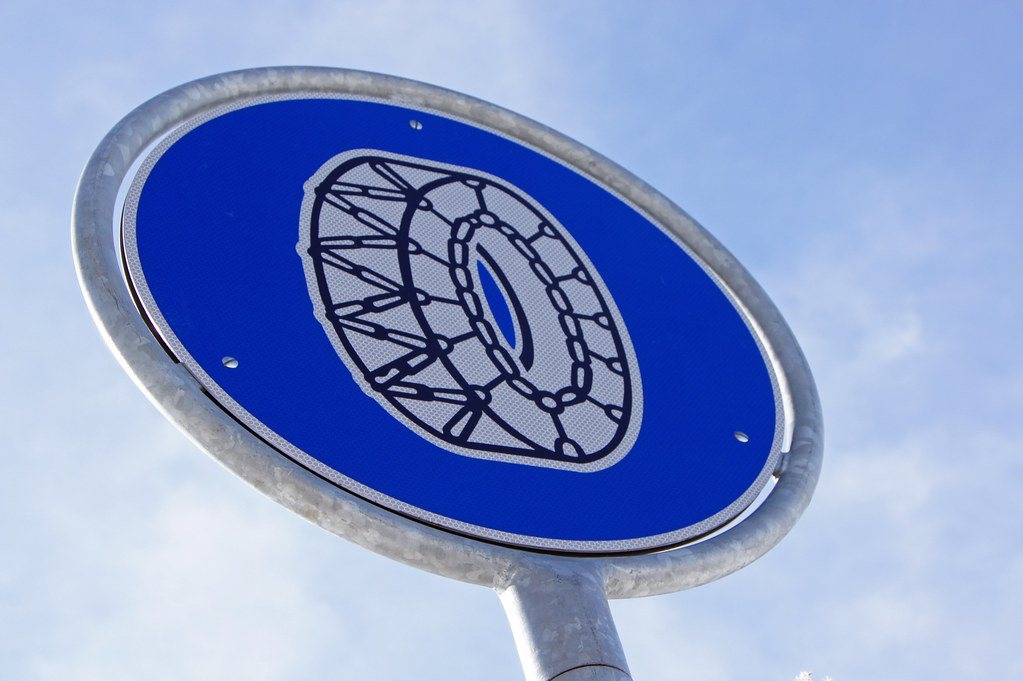
Switzerland is the odd one out. There's no general legal requirement for winter tyres, but drivers are responsible for having a car that's fit for the conditions. If you cause an accident or block traffic because you're on summer tyres in the snow, you can be fined and held responsible. Where a round blue sign showing a tyre with chains appears, chains are mandatory on that stretch. (This sign is used in other Alpine countries too, so learn to spot it.)
Rental cars and practicing with chains
Before you book, ask the rental company specifically whether the car comes with winter tyres for the dates and countries you'll be driving in, and whether chains are included or available. Cars picked up at lower-altitude or southern airports are the ones most likely to arrive on all-season or summer tyres. Some rental agreements also restrict taking a car across borders, so mention your route.
If you do carry chains, practice fitting them once on a dry day at home or in the hotel car park. Doing it for the first time on a snowy roadside in the dark is miserable (fingers stop cooperating after about two minutes). Fit them on the driving wheels, follow the maker's speed limit (usually around 50 km/h), and take them off once you're back on clear road.
A short winter driving checklist
The rules are only half of it. Keep the fuel tank well above a quarter full, since you may sit in traffic on a closed pass with the engine running for heat. Pack an ice scraper, gloves and a warm layer you can reach without unloading the boot, and keep your phone charged. Check the pass and road status before you set out, because high Alpine passes close in winter and some routes need advance chain checks.
And give yourself more time than the map suggests. Mountain roads in snow are slower than they look on a screen, and I'd rather arrive late for the first lift than spend the drive racing it.
See more of us on GoogleAdd TrueVoyager as a preferred source and our stories can show up more often for you in Top Stories.