Photo: KimonBerlin, CC BY-SA 2.0, via Wikimedia Commons
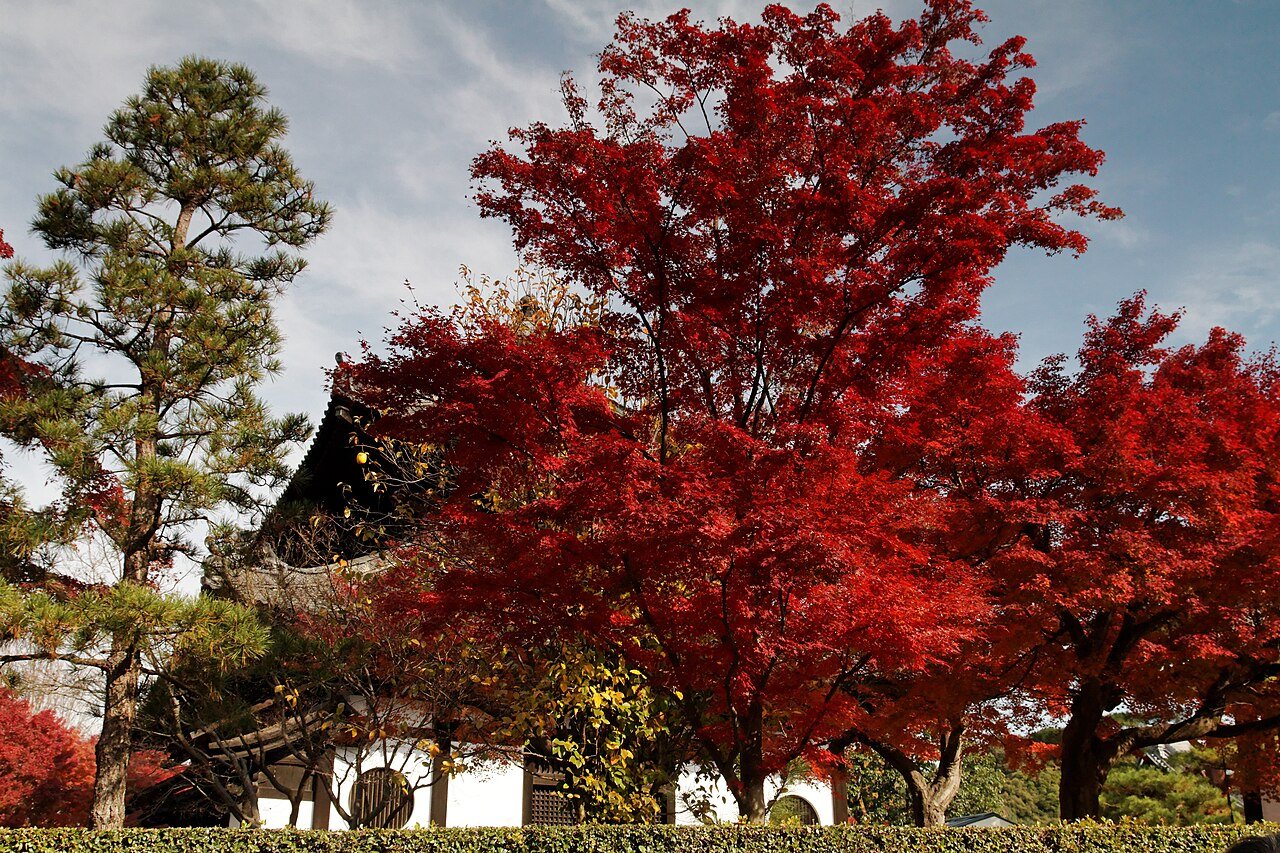
In a good year, the maples around Kyoto's temples turn a red so strong it looks like someone has turned up the saturation on real life. Locals have a word for going out to look at them, momijigari, which translates roughly as "hunting autumn leaves," and the habit goes back to the court culture of the Heian period, more than a thousand years ago.
Right now, in late October, most of Kyoto's trees are still green. That makes this the right moment to plan. The peak is a few weeks away, and the hotels that fill up for it don't wait for the leaves to change.
Below is when the color usually arrives, where I'd go to see it, and how to enjoy it without spending the whole day in a queue.
When the leaves usually turn
In central Kyoto, autumn color usually peaks from mid-to-late November and can carry on into the first week or so of December. The exact timing shifts each year with the weather. A warm autumn pushes it later, and a sudden cold snap can bring it forward.
The hills around the city change earlier. Places like Takao, Ohara and Kurama, which sit higher and cooler than the city center, often color up a week or two before the temples downtown. If your dates fall in early November, head for the hills. If they fall in late November, the city itself is your best bet.
Japanese weather services publish autumn leaf forecasts every year, much like the more famous cherry blossom forecasts in spring, and they're worth checking in the weeks before you go. I'd treat them as a good guide rather than a promise.
Tofuku-ji and its bridge of maples
Tofuku-ji, a large Zen temple complex in the southeast of the city, is the place that ends up on most posters. Its wooden Tsutenkyo bridge crosses a small valley packed with maples, and from the bridge you look down onto a sea of red and orange.
The view deserves its fame, and at peak it gets very crowded. In recent years the temple has stopped visitors from taking photos on the bridge during the busiest weeks, to keep people moving. So go for the view, take your pictures from the paths around it, and don't plan on lingering.
Getting there is easy. Tofukuji Station is served by both the JR Nara Line and the Keihan Main Line, and the temple is a short walk away.
Eikan-do, Kiyomizu-dera and the eastern hills
The eastern side of the city has the densest cluster of autumn spots. Eikan-do, formally called Zenrin-ji, has been known for its maples for centuries, and its garden and pond are lovely in color. Several temples in this area, Eikan-do among them, run special evening illuminations in autumn, when the trees are lit after dark. It's a completely different experience from daytime and well worth an evening.
Kiyomizu-dera, with its huge wooden stage built out over the hillside, also holds autumn night viewings. The view from the stage across a slope of maples to the city beyond is one of the best in Kyoto, though you'll be sharing it.
Between them, the Philosopher's Path runs along a canal lined with trees for a couple of kilometers, linking the area near Ginkaku-ji with the temples around Nanzen-ji. It's a pleasant walk in any season and a very good one in late November.
Arashiyama on the western edge
Out west, Arashiyama mixes mountain slopes, river views and temples. Tenryu-ji's garden, with the hills behind it, is a classic autumn scene, and the Togetsukyo bridge over the river gives you a wide view of the colored slopes.
Arashiyama is popular all year, and in autumn the main street can be shoulder to shoulder by late morning. The upside is that it's spread out. Walk a little way past the main sights toward the quieter temples of the Sagano area, and the crowds thin out noticeably.
How to beat the crowds
The best single piece of advice I can give is to start early. Many temples open their gates around 8 or 9 in the morning, and the first hour is calmer and better for photos (the light is softer then, too, which I'd argue matters more than any camera upgrade). By mid-morning the tour groups arrive.
Weekdays are noticeably quieter than weekends, and Japanese public holidays in November get very busy. Use trains and the subway where you can, and walk between nearby temples. City buses are useful in quieter months, but at peak foliage they can be packed and slow.
Pick two or three areas per day rather than trying to cover the whole city. The leaves will be just as red if you see four temples instead of eight, and you'll enjoy them more.
Planning your trip now
If you're going this year, book your accommodation now if you haven't already, because late November is one of Kyoto's busiest periods. Staying near a train line makes early starts much easier. Pack layers, since late-autumn days can be mild while mornings and evenings get properly cold.
Keep your itinerary loose enough to follow the forecast. If the color is late, spend your first days in the city center. If it's early, head out to Takao or Ohara. And leave room for at least one evening illumination. Of everything on this list, that's the one I'd least want you to miss.