On the evening of December 8, walk through almost any old neighborhood in Lyon and look up. Along the window sills, people set out small candles in colored glass cups, red and blue and clear, flickering in rows down the facades. The locals call them lumignons, and they have been doing this for well over 150 years.
Most visitors now know the date for something much bigger: the Fête des Lumières, the Festival of Lights, when artists project shows onto cathedrals and town halls and the city center fills with crowds. It's spectacular. But the light shows are the newcomer. The candles came first, and the story of how they started is one of my favorite accidents in European history.
A plague vow and a hill above the city
The festival's roots go back to 1643, when plague was threatening Lyon. The city's aldermen made a vow to honor the Virgin Mary every year if the city was spared, and they kept it with a procession up the hill of Fourvière, which rises steeply above the old town and the Saône river. That ceremony is still held each September.
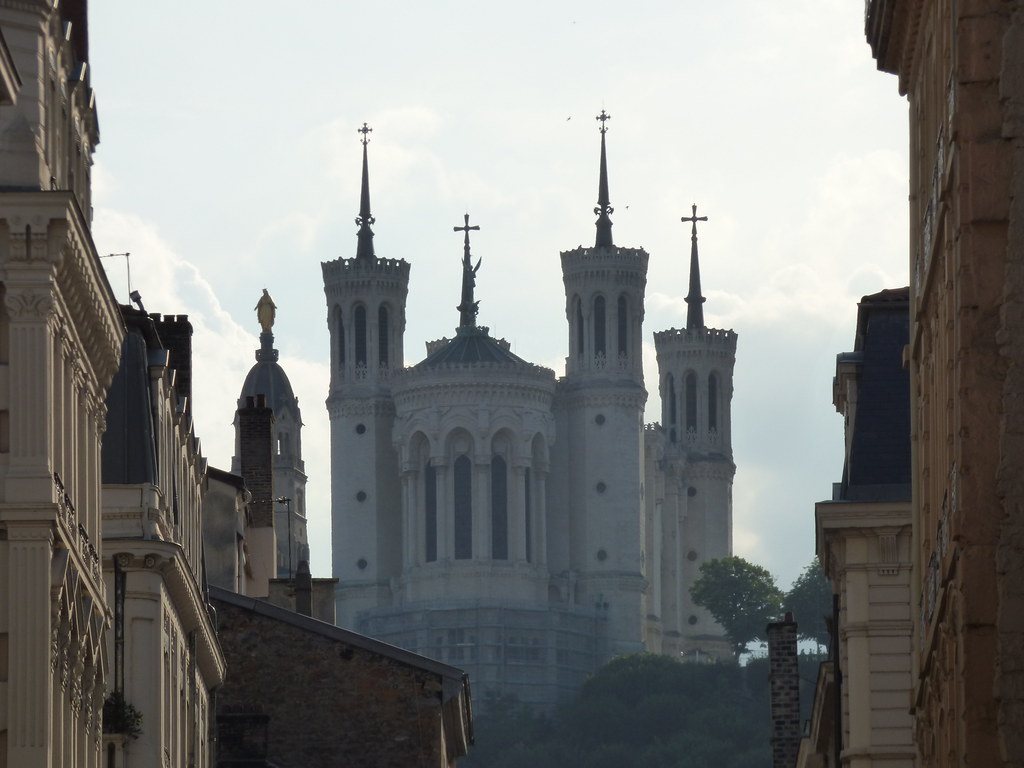
Fourvière became the city's spiritual lookout. By the 19th century there was a chapel on the hill, and the people of Lyon decided it deserved a statue of Mary on its bell tower, gilded so it would catch the light and could be seen from the city below.
The ceremony that nearly got rained out
The statue, by the Lyon sculptor Joseph-Hugues Fabisch, was meant to be unveiled on September 8, 1852, the feast of the Nativity of Mary. Flooding of the Saône delayed the work, and the ceremony was moved to December 8, the feast of the Immaculate Conception.
The city planned illuminations and fireworks for the evening. Then the weather turned bad, and it looked as if the celebration would be called off. When the sky cleared, people did not wait for the official program. They put candles in their windows, lit up the facades themselves and went out into the streets, and a good part of the city glowed for the night.
They did it again the next year, and the year after that. December 8 became the night of the lumignons, and families still keep it.
From window candles to a light festival
The basilica that now dominates the hill, Notre-Dame de Fourvière, came later, built in the late 19th century next to the old chapel, which still carries the golden statue. Lit up at night, it is the image on most of the festival posters.
The big modern festival developed much more recently. Lyon had been lighting its monuments for years, and from 1999 the city turned the December 8 tradition into an organized festival of light installations spread over several nights. It now draws visitors from all over Europe, and crowd estimates are regularly put in the millions (I'd treat the exact figures with some caution, but anyone who has been knows the streets are packed).
What the festival is like now
The installations change every year. Some are projection shows on large buildings such as the cathedral of Saint-Jean or the Hôtel de Ville on Place des Terreaux, timed to music and repeated through the evening. Others are smaller pieces tucked into courtyards, parks and riverbanks.
The candles are still the part I'd tell anyone not to miss. Walk the streets of Vieux Lyon or the Croix-Rousse slopes on the evening of the 8th and look at the windows. Shops and supermarkets sell lumignons in the days before, and a lot of visitors buy a few to take home.
How to visit without hating the crowds
The festival is usually held over four nights around December 8, but the exact dates and the program are set each year, so check the official Fête des Lumières website before you book anything. Accommodation fills up early and costs more during the festival, so booking well ahead is sensible, or you can stay somewhere along the train line and come in for the evenings.
Expect large parts of the center to be closed to traffic, with set walking routes and some one-way pedestrian streets. Public transport runs, but it's crowded. Comfortable shoes and patience matter more than a perfect itinerary. Going on the first night or later in the evening can help, and the smaller installations away from the main squares are often less crowded than the headline shows.
Eat like a Lyonnais while you are there
Lyon has a reasonable claim to being France's food capital, and December is a good month to test it. Find a bouchon, the city's traditional small restaurants, for heavy, comforting dishes. On the street you'll find mulled wine, roasted chestnuts and plenty of other things to keep your hands warm.
Look out for papillotes, too. These chocolates wrapped in shiny paper with a little printed message or joke inside are a Lyon Christmas tradition, and they make a better souvenir than another fridge magnet.
See more of us on GoogleAdd TrueVoyager as a preferred source and our stories can show up more often for you in Top Stories.