Marcin Sochacki (Wanted), CC BY-SA 4.0, via Wikimedia Commons
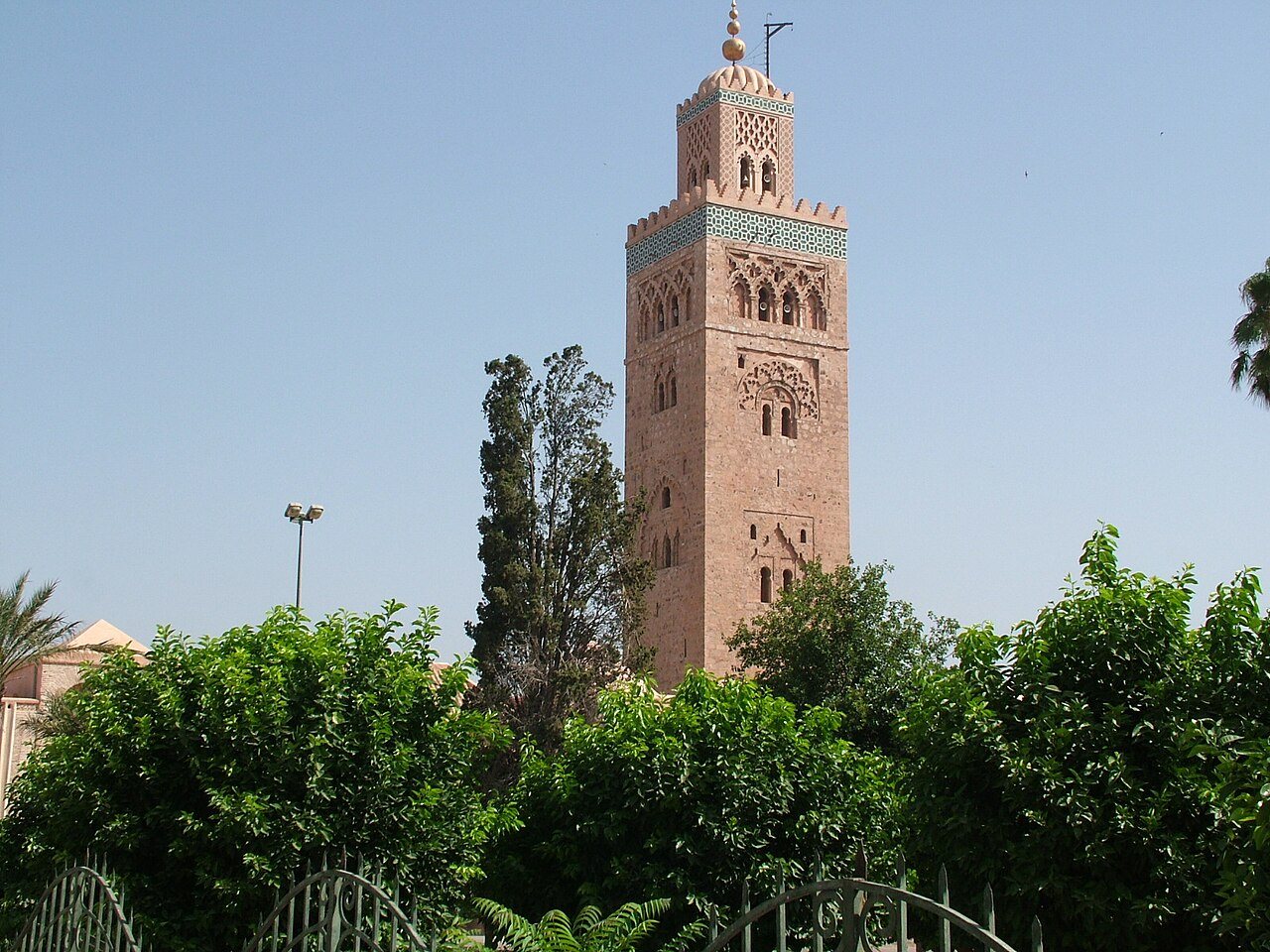
Stand in a garden near the Koutoubia Mosque on a clear winter morning and you can sometimes see snow on the High Atlas to the south, while the palm trees around you sit in warm sunshine. That contrast is most of the argument for Marrakech between November and February.
Summer in Marrakech is fierce, with afternoons that make walking the medina hard work. Winter is a different city. The days are usually mild and bright, good for exploring on foot, and the evenings turn properly cold once the sun goes down.
It is also a short flight from much of Europe, which makes it one of the easier winter-sun breaks that still feels like somewhere else entirely. I'd go for four or five nights if you can, enough for the city plus a day in the mountains.
What the weather is really like
Winter afternoons in Marrakech are typically pleasant, often in the high teens Celsius, and sunshine is the norm. Rain comes on some days but rarely settles in for long. The catch is the nights. Temperatures can drop sharply after dark, and many traditional riads, built around open courtyards to stay cool in summer, can feel chilly in December and January.
Pack the way you would for a crisp autumn weekend at home: light layers for the day, a warm jumper or fleece and a proper jacket for the evenings, and comfortable shoes for uneven streets. When booking a riad, it is worth checking whether the rooms have heating. Plenty do, but not all.
The medina and Jemaa el-Fnaa
The old walled city, the medina, is a UNESCO World Heritage Site, and most first visits centre on it. At its heart is Jemaa el-Fnaa, the big open square that changes character through the day. In the morning it is fairly quiet. By late afternoon the storytellers, musicians and food stalls move in, and after dark the smoke from the grills hangs over the whole place.
UNESCO has also recognised the square's tradition of storytelling and street performance as intangible cultural heritage. Fair enough, since the square itself is mostly a big open space and the performers are what people come for. Winter evenings there are lively but cold, so eat early at the stalls or find a rooftop café with a view and a heater.
The souks spread north of the square in a maze of lanes, each loosely grouped by trade. You will probably get lost at least once (everyone does), and an offline map on your phone helps. A polite but firm "no thank you" goes a long way with persistent touts and unofficial guides.
Palaces, tombs and a madrasa
The Koutoubia Mosque, whose 12th-century minaret is the city's best-known landmark, is closed to non-Muslims, but the gardens around it are open and make a good starting point. Nearby, the Saadian Tombs hold the burial chambers of a 16th-century dynasty, rediscovered in the early 20th century after being sealed off for generations. Lines can build up, so go early.
The Bahia Palace, built in the 19th century, is a sprawl of courtyards, painted ceilings and tiled rooms. The Ben Youssef Madrasa, a former Islamic school with a carved central courtyard, is one of the most photographed interiors in Morocco. Winter light is softer than in summer, which suits all three.
Jardin Majorelle and the new town
Outside the medina walls, Jardin Majorelle is the garden created by the French painter Jacques Majorelle, famous for its intense blue buildings and cactus beds. Yves Saint Laurent and Pierre Bergé bought it in 1980 and saved it from redevelopment. It is popular, and booking ahead online is wise.
Next door, the Musée Yves Saint Laurent Marrakech covers the designer's work and his long connection with the city. Gueliz, the newer district nearby, is a useful change of pace when the medina gets overwhelming, with wider streets and cafés.
A day in the Atlas Mountains
Winter is when the mountains look their best from the city, and they are easy to reach. The Ourika Valley and the village of Imlil, a base for walks in the High Atlas, are popular day trips, usually with a driver or as part of a small tour.
Expect it to be much colder than in Marrakech, especially at altitude, and conditions can change quickly. Higher trails may have snow and ice in midwinter, so a local guide is a sensible choice if you plan to walk anything more than a gentle valley path. The region was hit hard by the September 2023 earthquake centred in the High Atlas. Visitors who travel with local guides and drivers are putting money directly into those communities.
Practical notes before you book
Prices for flights and riads tend to climb around Christmas and New Year, when Marrakech is busy with European visitors. Late November and January are often calmer. Dress modestly in the medina out of respect, with shoulders and knees covered, which also happens to suit the cooler weather.
Check your government's latest travel advice and Morocco's entry rules for your passport before booking, since those can change. And whatever else you pack, bring a warm layer for the evenings, because the roof terraces get cold fast after sunset.
See more of us on GoogleAdd TrueVoyager as a preferred source and our stories can show up more often for you in Top Stories.