Photo: Karelj, public domain, via Wikimedia Commons
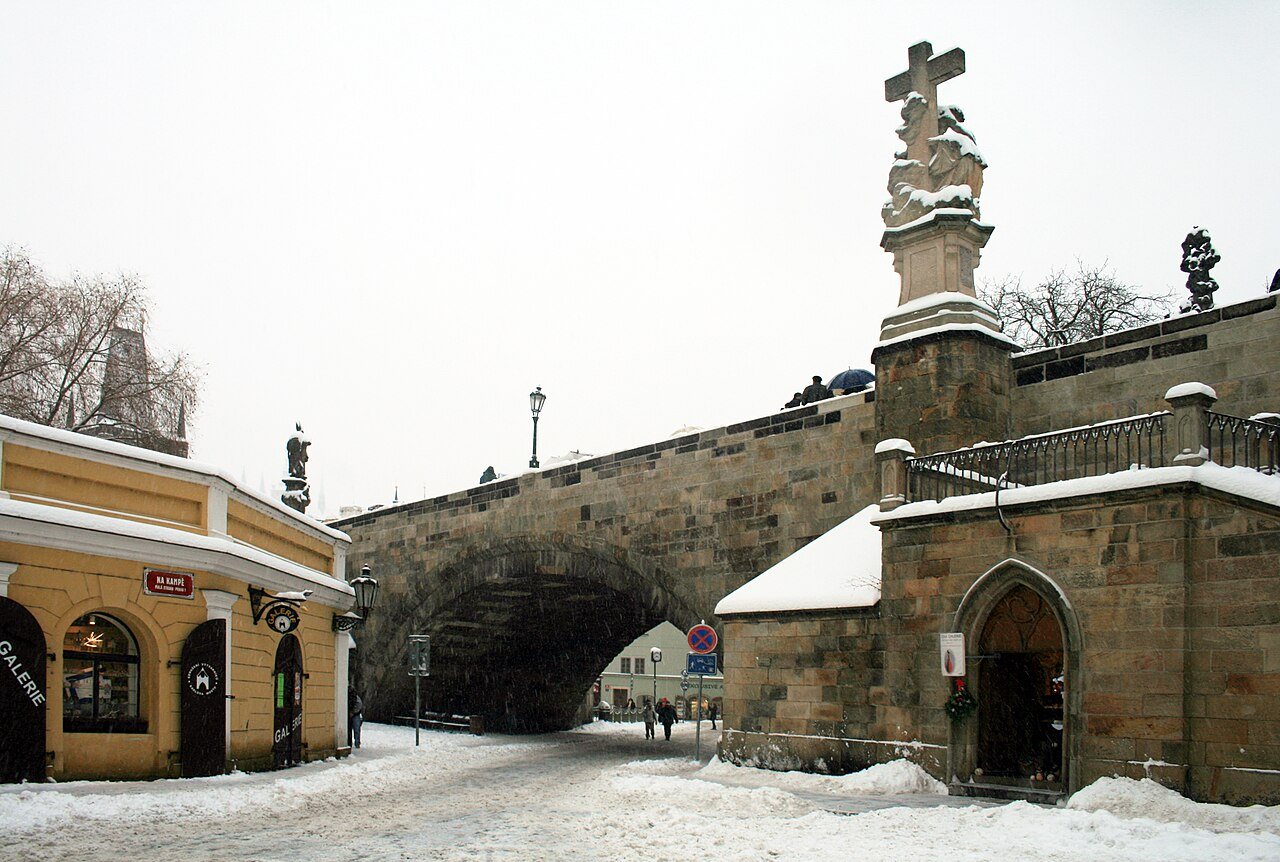
Summer packing forgives you. A week in Lisbon in July is a few T-shirts and a pair of sandals. A week in Prague in December is a coat the size of a sleeping bag, boots you can't fold, and a sweater that fills half the case on its own, which is how people who always travel light end up standing at a baggage carousel in winter.
It doesn't have to go that way. A cold-weather city break fits in one cabin bag if you plan around layers and accept that you'll wear a few things twice. I'd go further and say it's easier than it sounds, because a city gives you shops, radiators and hotel sinks, and that takes a lot of the pressure off.
One caveat before we start. Cabin bag sizes and allowances vary by airline and even by fare type, so check yours before you buy anything or pack anything. Basic fares on some airlines may not include a full-size carry-on at all.
Wear the bulk, pack the rest
The biggest saving happens before you get to the airport. Your heaviest coat and boots should go on your body, not in the bag. Yes, you'll look overdressed at the gate and spend the flight with a coat over your knees (or stuffed overhead). That's the price, and it's a small one.
Add to that your thickest sweater and the bulkiest trousers you're bringing. Outerwear with deep pockets helps too, since your hat, gloves and scarf can ride in there, freeing up more room. Most airlines don't weigh your pockets.
Laceless boots are worth considering if you're flying from an airport where you may have to take them off at security.
Two thin layers beat one thick sweater
This is the idea that makes the whole thing work. A thin base layer and a thin midlayer together can be as warm as one bulky sweater, and they pack down to almost nothing. They also let you adjust, which matters more than people expect. Winter city days swing between freezing streets and overheated museums, trams and cafes, and you'll want to shed something the moment you step inside.
A sensible system has three parts. The base layer sits against your skin: merino, silk or a thin performance fabric. The middle layer is a light wool sweater or fleece. The outer layer is that coat you wore on the plane, ideally with a good warmth-to-weight ratio and a wind- or water-resistant shell.
For a very cold destination, add a pair of thermal bottoms or leggings under your trousers. They weigh next to nothing, and on a windy bridge you'll be glad you have them.
Why merino earns its price
If you buy one thing for winter trips, make it a merino base layer or two. It's warm for its weight, it breathes, and it doesn't hold on to odors the way synthetics tend to, so you can wear it several times between washes. It costs more than a basic thermal top, and I think it's worth it. Merino socks work on the same principle.
Socks and underwear are the items people overpack most, in my view. A small bottle of detergent (or a sheet or two of the solid kind) and a hotel sink solve that. Wash in the evening, hang them over the radiator or a heated towel rail, and they're usually dry by morning.
A packing list for five to seven days
On top of what you're wearing, the bag holds two base layer tops and a pair of thermal leggings, two or three light tops you can mix, and one extra sweater. Add a second pair of trousers or jeans dark enough for dinner, and one pair of lighter shoes that can dress up or down.
Underwear is four or five pairs, socks three. Sleepwear can just be a clean base layer. A compact umbrella and a charger with the right plug adapter go in the outside pocket, and that's about all there is to it.
Stick to a neutral palette so that everything goes with everything, and let a scarf or two provide the color. Scarves weigh little and change an outfit more than you'd think.
Liquids, and the cold-weather extras
Airport liquid rules still shape what you can carry. As of reporting from this summer, the TSA's 3-1-1 rule in the US stands: containers of 3.4 ounces or less, all fitting in one quart-size bag per traveler. Rules in other countries differ, and some airports with newer scanners have changed their procedures, so check the airport you're leaving from, in both directions.
Winter skin tends to want more cream, not less, and that's the catch. Solid moisturizer and lip balm get around part of the problem, and any city you're visiting will sell hand cream if you run out. Pack sunscreen and sunglasses if you're heading for snow or a bright, low-sun destination, since glare still counts in winter.
What to leave at home
Leave the "just in case" sweater, the second pair of boots and the heavy travel iron. A travel-size fabric spray freshens clothes for a second wear. And you can buy what you've forgotten, which is the great advantage of a city over a mountain. If the temperature drops further than the forecast said, a hat or gloves from a local market is a better souvenir than most.
Weigh the packed bag at home if your airline has a limit. If you're over, the extra sweater is the first thing I'd take out, since you'll be wearing the warm one anyway.
See more of us on GoogleAdd TrueVoyager as a preferred source and our stories can show up more often for you in Top Stories.