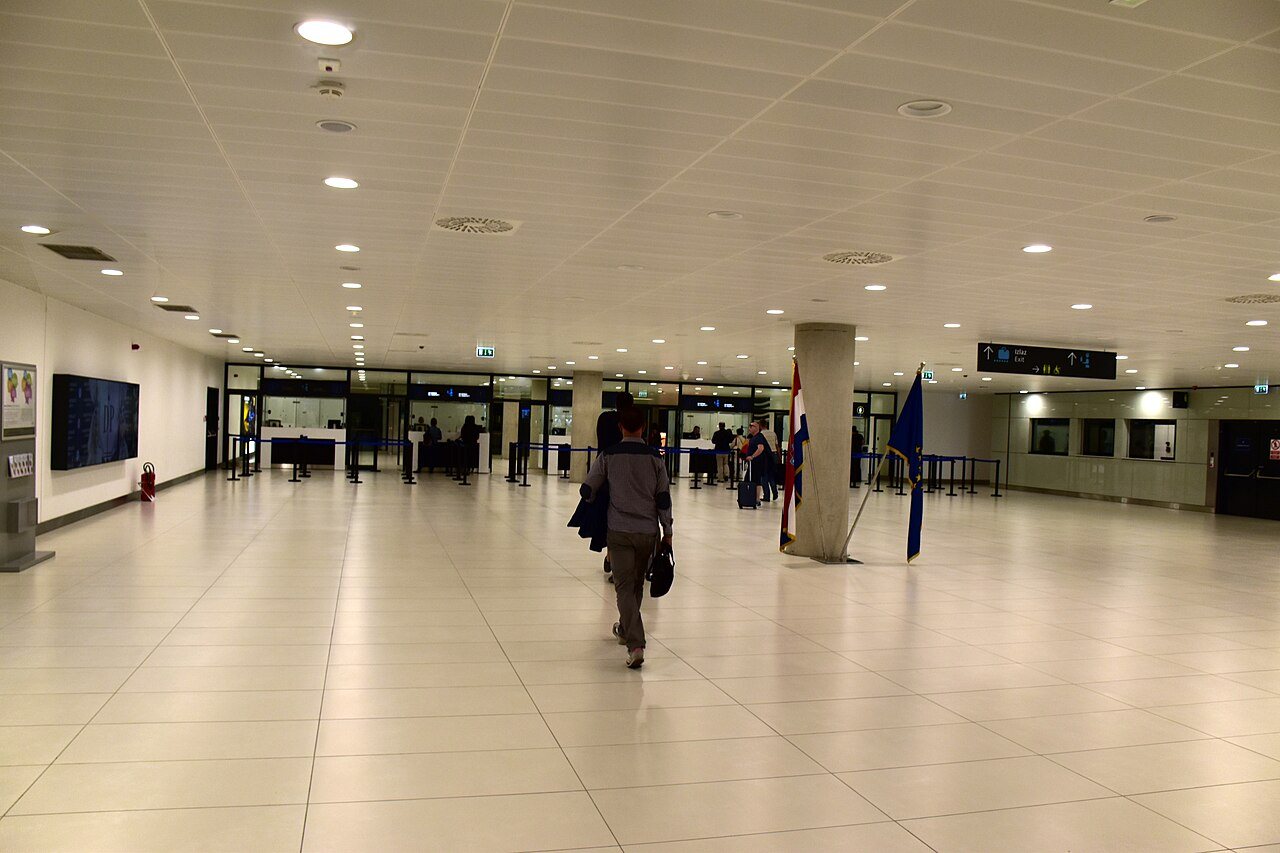
Photo: Vasyatka1, CC BY-SA 4.0, via Wikimedia Commons
If you're flying to Europe for the Christmas markets or a ski week this winter, you've probably seen two acronyms in the news, and they're easy to mix up. One of them is already operating at the border. The other, as of this writing, still doesn't exist, even though there are websites happy to sell it to you.
The Entry/Exit System, or EES, is live. ETIAS, the travel authorization that was supposed to follow it, has no launch date. The rest of this piece covers what each one means for your trip, based on what the EU and travel trade bodies had said by mid-October 2026. These things have a habit of shifting, so check the official site before you go.
EES replaced the passport stamp
The Entry/Exit System is a biometric border register for non-EU travelers making short stays in the Schengen area. It was phased in from October 12, 2025, and it was declared fully operational on April 10, 2026.
In practice, the first time you cross into the Schengen area under the system, your passport is scanned and your fingerprints and a facial image are recorded. Children under 12 give a photo but no fingerprints. Your record is then used for later crossings for three years, so the first trip is the slow one. After that, your entries and exits are logged electronically in place of a stamp.
I'll miss the stamps, for the record. I'm aware this is a silly thing to miss.
The system also does the math on the 90 days in any 180-day period rule automatically. If you've ever counted those days loosely, stop. The border now counts them for you, with no room for a friendly shrug.
What the queues are really like
Reports have varied a lot. Over the summer, airports and airlines warned of waits of up to three hours at peak times, and Forbes reported claims of delays nearing five hours at busy southern European hubs. Other travelers walked straight through. The same report cited a figure that around 20 of the EU's 1,500 border crossing points were considered problem spots, typically small airports with few biometric booths that swamp at peak moments.
Winter should be gentler than August, simply because fewer people are moving, but that's my reasoning and not a promise. The busy days to worry about are the same ones as always: the weekends around Christmas and New Year, plus ski-resort changeover Saturdays.
Plan your connections around the first crossing
If this is your first trip under EES, the main thing to protect is your connection. When you change planes in Europe on the way to a Schengen destination, you clear the border at the first Schengen airport, not your final one. A tight layover that worked in 2024 may not work now. I'd leave extra time, particularly at a busy hub and particularly around the holidays.
The same applies leaving Europe. Your exit is also logged, so get to the airport early enough that passport control isn't where your morning goes wrong.
If you're leaving Britain by the Eurostar, the Dover ferries or the Eurotunnel shuttle, the French border checks take place on the UK side before you depart. So that's where you'd do your EES registration, and where any delay will fall.
Also worth checking while you're at it, though it isn't new: your passport should generally be valid for at least three months after your planned departure from Schengen and issued within the last ten years. Check both dates before you book anything.
ETIAS isn't running, and you can't apply yet
ETIAS will be a pre-travel authorization for visitors from visa-exempt countries, including the US, Canada, the UK and Australia. It's been delayed repeatedly. The EU quietly took its "last quarter of 2026" target off the official site in July, and the Financial Times reported that eu-LISA, the agency building it, considered a 2026 launch no longer feasible. The site SchengenVisaInfo reported on October 19 that no date had been announced, and ABTA, the UK travel trade body, said the same on October 13.
So for this winter's trip, there's nothing to apply for and nothing to pay. EU authorities have said they will announce a date several months ahead, and Euronews has reported that a transition period of about six months is expected after launch, during which you could apply but wouldn't be refused entry for not having it.
When it does arrive, the fee is due to be €20, with no charge for applicants under 18 or aged 70 and over. An authorization will last three years or until your passport expires, whichever comes first. Some outdated articles still quote the older €7 fee, so don't be surprised if you see it.
How to avoid the ETIAS scam sites
This is the one that could cost you money right now. Because the name is everywhere, a number of unofficial sites look like government portals and offer to file an application for you. No applications are being collected, so anyone taking a payment for ETIAS today isn't selling you anything real.
When the system does open, use the official EU site, travel-europe.europa.eu, and be wary of paid search ads that land above it. Travel agents who handle this for a living have been warned about the same thing.
What I'd do before a winter trip
Check your passport dates, give yourself more connection time than you think you need, and look at the official site about a week before you leave. Keep a copy of your hotel booking and return ticket handy too, since border officers can ask about them.