Seville in July is an endurance event. The city regularly ranks among the hottest in Europe, and in midsummer the streets empty out in the afternoon for good reason. Spring is lovely, but it's also when the city hosts Holy Week and the April Fair, and hotel prices and crowds climb to match.
November sits in the gap. Afternoons are usually warm enough for a jacket over your arm rather than on your back, the light is soft, and the queues at the big sights are shorter than at any time except the depths of winter. The bitter oranges that line the streets are ripening on the trees, too, which is a nice thing to walk under.
It does rain sometimes in late autumn, so pack a small umbrella. Otherwise, this is my favorite month to send people here.
The Alcázar, without the summer crush
The Real Alcázar is the reason most people come, and it deserves it. The royal palace complex grew over centuries, and its best-known part is the palace that King Pedro I built in the 14th century in the Mudéjar style, with Islamic-inspired plasterwork, tiled walls and courtyards built around water. The gardens behind it are big enough to get pleasantly lost in.
Fans of Game of Thrones may recognize parts of it as the Water Gardens of Dorne. You'll see people trying to recreate shots by the pools (the pools photograph best early, before the tour groups arrive).
Book a timed ticket online before you go, even in November. Same-day queues can still be long on weekends, and the official site sells set entry times. Go early in the morning, when the courtyards are quiet and the tiles catch the low sun.
The cathedral and the Giralda
Seville Cathedral is one of the largest Gothic cathedrals in the world, built on the site of the city's great mosque after the Christian conquest in the 13th century. Inside is a monumental tomb for Christopher Columbus, carried by four figures representing the old Spanish kingdoms. Where exactly all of Columbus ended up has been argued over for a long time, and DNA testing has linked remains in Seville to his family, so I'll leave the final word to the historians.
The bell tower, the Giralda, began life as the minaret of that 12th-century mosque. Instead of stairs, you walk up a series of ramps, wide enough that they're traditionally said to have been designed so a rider on horseback could reach the top. The climb is easier than it looks, and the view over the rooftops is the best in the old town.
Plaza de España and María Luisa Park
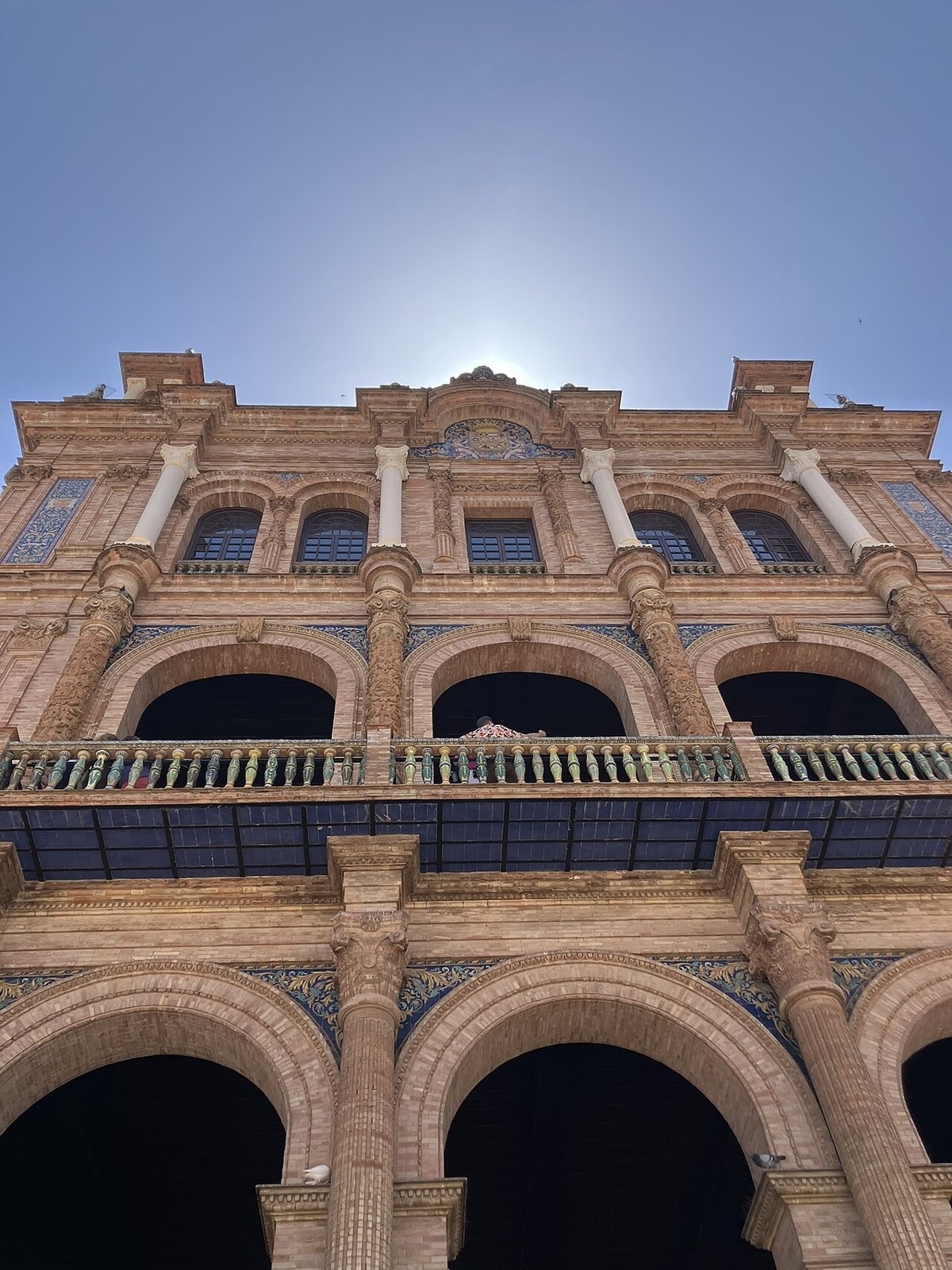
The Plaza de España looks centuries old, but it was built for the Ibero-American Exposition of 1929. The huge semicircular building curves around a canal with little bridges, and along its base runs a row of tiled alcoves, one for each Spanish province, each with a painted scene and map. Locals and visitors hunt for their home region, and it's a fun way to spend half an hour.
The plaza sits on the edge of María Luisa Park, which is shady and green and lovely on a November afternoon. Bring a pastry from a bakery and find a bench.
Triana and the river
Cross the Guadalquivir by the Isabel II bridge, usually just called the Triana bridge, and you're in Triana, the old neighborhood of potters, sailors and flamenco artists. The ceramics workshops and tile shops are still there, and so is the covered Triana Market, which is good for a late-morning snack and a look at what's in season.
Triana has a strong claim on flamenco history, and you'll find small venues on both sides of the river. Smaller tablaos and cultural centers tend to give a more intimate show than the big dinner-and-dance places, though that's a matter of taste.
A mushroom over the old town
The Metropol Parasol, a giant wooden canopy in Plaza de la Encarnación that opened in 2011, gets called Las Setas, "the mushrooms," by just about everyone. Opinion in the city was split when it went up. I like it. There's a walkway across the top with views over the old town, and sunset in November comes early enough that you can catch it before dinner.
Below it, on the lowest level, there's an archaeological area showing Roman and later remains found during construction. It's easy to miss, and worth a look.
Planning tips for a November trip
Stay in or near the old town, around Santa Cruz, El Arenal or the area near the Alameda de Hércules, so you can walk almost everywhere. Seville is flat and compact, and walking is the best way to see it.
Spanish meal times are late, and that doesn't change in autumn. Lunch runs well into the afternoon, and many kitchens don't get busy until 9 p.m. or later. Tapas bars are the easy way to adjust: a couple of small plates at one, then move on.
Check opening hours and ticket rules on official sites before you travel, since they change, and keep an eye on the forecast for a rainy day you can spend inside the Alcázar or the Museo de Bellas Artes. And if you're wondering about those oranges on the street trees, they're the bitter kind, too sour to eat raw. Much of the crop has traditionally gone to Britain for marmalade, so leave them on the branch.