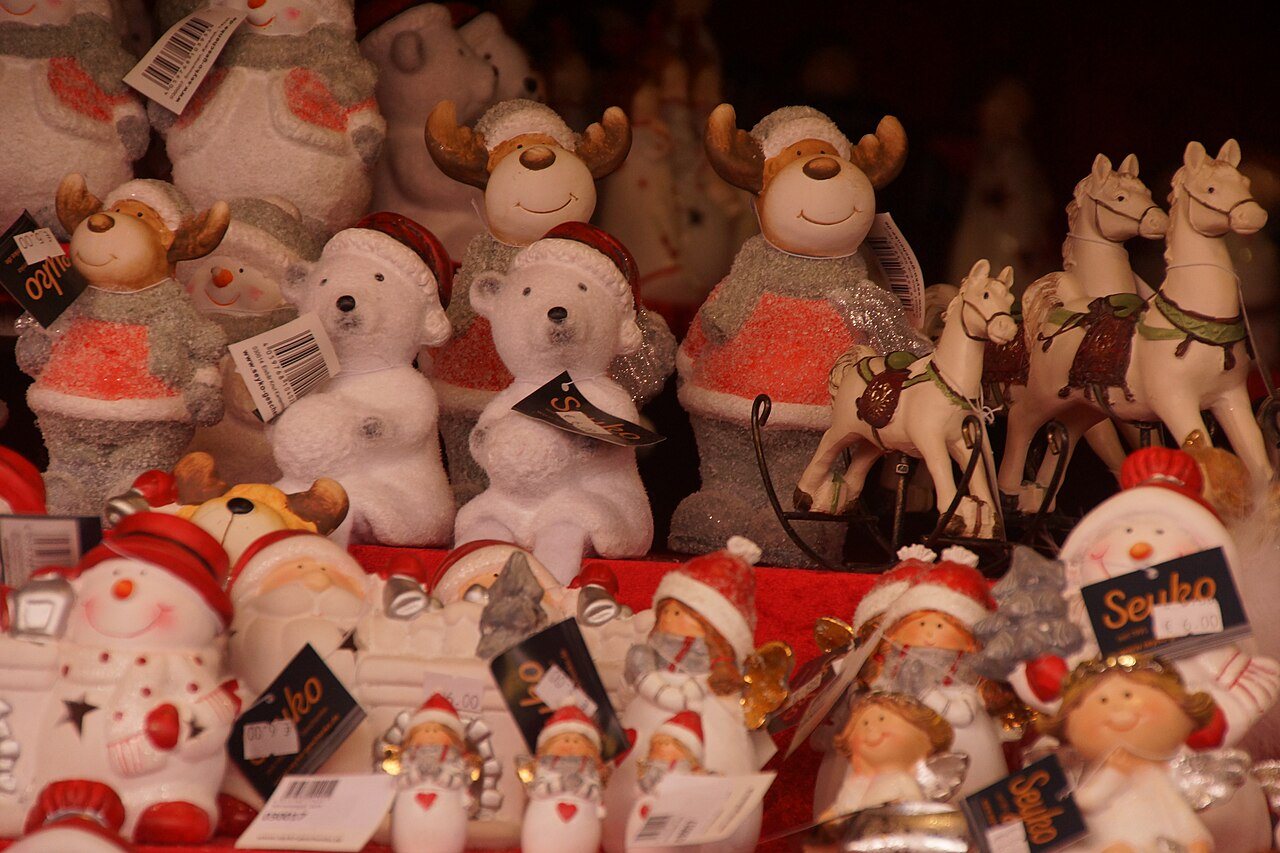
Photo: DALIBRI, CC BY-SA 4.0, via Wikimedia Commons
Late October is about the last comfortable moment to plan a Christmas market trip. The markets themselves won't open for another few weeks, but hotel rooms in the famous market towns go early, and the weekends in December fill first.
If you've never been, the basic idea is simple. Squares in hundreds of towns, mostly across Germany, Austria, Alsace and Central Europe, fill with wooden huts selling ornaments, toys, sausages, gingerbread and hot mulled wine. Some are huge and famous; plenty more are small and local, and in my view the small ones are often the nicer evening out.
The rest of this is the practical part, mostly about timing, since that decides how crowded your evening will be.
When the markets open (and close)
Most traditional markets open in the second half of November and run until just before Christmas. Many tie their opening to Advent. Nuremberg's Christkindlesmarkt, for example, traditionally opens on the Friday before the first Sunday of Advent, which this year puts it on November 27. Others, including several in Vienna and in bigger German cities, open earlier in the month.
The closing date matters more than people expect. A lot of markets shut down on December 23 or the morning of Christmas Eve, and only some keep going into the days after Christmas. If you're planning a trip over the holiday itself, check each market's official dates before you book. Dates shift from year to year, and the official city or tourism site is the only place I'd trust for them.
Picking your markets
The famous names are famous for good reasons. Nuremberg's market is one of the best known in Germany. Dresden's Striezelmarkt is usually described as one of the oldest, with records going back to 1434. Strasbourg, in Alsace, has held a Christmas market since the sixteenth century and now calls itself the capital of Christmas, which is a big claim but not an unreasonable one once you see the city lit up.
The trade-off is crowds. If you want to see the big ones, consider basing yourself in one city and taking day trips to smaller towns nearby. Rail connections in Germany and Austria make that fairly easy, and the smaller markets are where you're more likely to find local crafts rather than the same mass-produced ornaments you saw two towns ago.
Beating the crowds
Timing is the main tool you have. Weekday afternoons are generally the quietest, and weekend evenings the busiest by a wide margin. The first week after opening tends to be calmer than mid-December, when coach tours and office parties arrive in force.
Going early in the day has another advantage: you can actually look at the stalls. After dark is when the markets look their best, though, so a good compromise is to shop in daylight and come back for an hour once the lights are on. (You'll want a mulled wine at that point anyway.)
Big markets can get tightly packed in the evening, so keep your bag in front of you and your phone in an inside pocket. Pickpockets work Christmas crowds the same way they work any other crowd.
The mug, the deposit and the cash
At many German and Austrian markets, hot drinks come in a ceramic mug, and you pay a deposit on top of the drink price. Bring the mug back to any stall in that market and you get the deposit returned. Keep it and the mug is yours. Many markets design a new mug each year, so a lot of visitors treat it as a cheap souvenir.
Card payment is far more common at markets than it used to be, but it still isn't universal, especially at smaller stalls and in smaller towns. Carry some cash in small notes and coins. It also makes the deposit returns quicker.
Dressing for a long evening outdoors
The thing people underestimate is how cold you get standing still. Walking around a city in December is fine; standing at a high table for an hour with a drink is not. Warm, waterproof shoes with thick socks matter more than the coat, and layers you can open up are useful when you duck into a heated shop or a church.
Gloves you can use a phone in are worth packing too, unless you enjoy taking them off every time you want a photo.
Booking now
If you're going, book accommodation soon, especially for Friday and Saturday nights in December in the famous market towns. Trains are the easiest way between cities, and booking long-distance tickets ahead usually gets better fares than buying on the day. I'd also leave an evening or two unplanned, in case you hear about a small village market nearby that isn't in any guidebook.